

Artificial intelligence has transformed how we research complex topics. Within seconds, you can ask an AI chatbot questions about estate planning and receive what looks like expert guidance — definitions of legal terms, explanations of wills and even suggestions for protecting your assets.
Estate planning doesn’t begin and end with gathering information. It requires making deeply personal decisions that will protect your family and assets for years to come. While AI can help you understand the basics, it can’t replace the human judgment, legal expertise and emotional intelligence required to create a plan that truly works for you and your loved ones.
At a Glance:
AI can help you research estate planning basics, but it cannot replace an experienced attorney. It lacks the human judgment needed to navigate complex family dynamics, make crucial decisions and ensure compliance with New York law. An attorney protects your family and assets with a customized plan.
Can AI Help With Estate Planning?
Yes, but only to a point. Using AI in estate planning can be helpful if you’re just beginning to explore this topic. Here’s what AI does well:
- Providing basic definitions: AI can explain what a trust is or define terms like probate and power of attorney.
- Gathering general information: You can ask about common estate planning tools and receive straightforward explanations.
- Answering simple questions: AI can answer queries like “What’s the difference between a will and a trust?”
- Directing you to topics worth exploring: AI can help you identify areas you might not have considered, such as health care directives.
Think of AI as a research assistant that points you in the right direction. It’s useful for understanding terminology and getting a general sense of what estate planning involves. However, understanding concepts and creating a legally sound, personalized plan are two very different things. One common myth about estate planning is that you can effectively do it online with the help of AI.
Risks of Using AI for Estate Planning
The biggest danger isn’t what AI gets wrong on the surface. It’s the false sense of security it creates. An AI-generated document might look official and complete, but its flaws won’t reveal themselves until it’s needed most. This will typically be when you become incapacitated or after you pass away. By then, it’s too late to fix the problems, and your loved ones are left dealing with the consequences you were trying to avoid. Specific risks include:
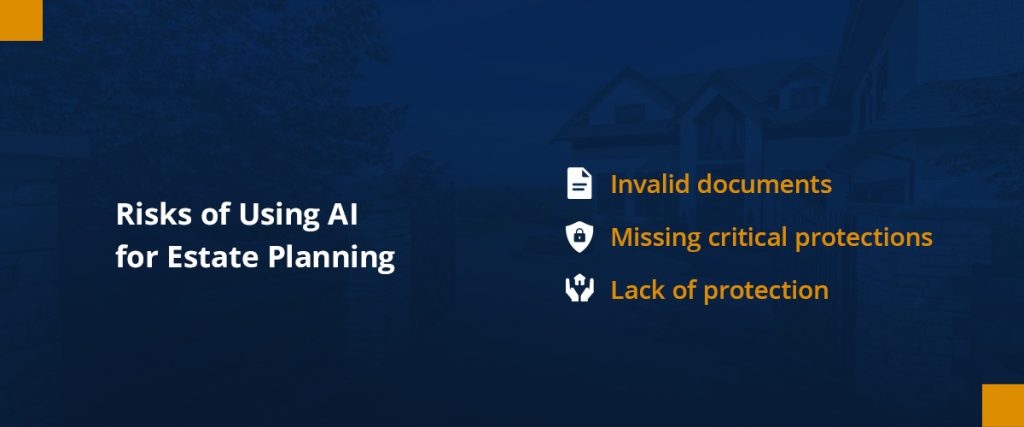
- Invalid documents: AI may create documents that don’t meet New York’s specific legal requirements for execution, witnesses or notarization, making them unenforceable.
- Missing critical protections: AI can’t identify which asset protection strategies or structures you need based on your unique financial situation and family dynamics.
- Lack of protection: If an AI-generated plan fails, you have no legal protection or professional liability coverage to help your family recover.
The Human Side of Estate Planning
Estate planning involves far more than just documents. At its core, it’s about understanding people, their relationships, values, concerns and hopes for the future. This is where the comparison between an estate planning attorney versus AI becomes starkest. Let’s break down some reasons AI can’t replace human expertise.
Planning Is Social Work, Not a Formula
There’s a reason experienced estate planning professionals describe much of their work as social work. While artificial intelligence merely processes information, human intelligence applies it alongside experience, wisdom and compassion. When you’re making decisions about your family’s future, the latter makes all the difference.
Estate planning goes beyond cataloging your assets. It involves understanding you as a person. An attorney asks questions like:
- What matters most to you?
- What concerns keep you up at night?
- What do you hope your legacy will accomplish?
This attention to detail is less likely if you’re using artificial intelligence in estate planning.
Complex Family Dynamics
Family dynamics can be complicated. For instance, you may have an estranged child you still want to provide for, or a loved one who needs protection from creditors or their own financial decisions.
These situations require thoughtful conversations that take into account personalities, relationships and potential conflicts. An estate planning lawyer helps you think through scenarios AI can’t even recognize, let alone navigate. How do you provide for a current spouse while ensuring your children from a previous marriage receive their share of your estate? How do you leave assets to someone who struggles with money management? You’ll be putting your future at risk if you take estate planning advice from an AI chatbot that can’t understand these complexities.
Crucial Decision-Making
Who is the best person to make medical decisions for you if you can’t make them yourself? Should it be one person or two? Should they act together or independently? What if they disagree? AI can’t have this conversation with you.
An estate planning lawyer will help you think through the pros and cons based on your family members’ personalities, where they live and how well they work together. They’ll ask about backup decision-makers and help you avoid situations where family members end up in court fighting over your care.
Legal and Financial Complexities AI Can’t Grasp
Beyond the human and emotional considerations, estate planning requires specific, current legal and financial expertise. This is where AI’s lack of up-to-date, location-specific knowledge becomes most dangerous. The most costly mistakes happen in the following areas.
New York Law Requirements
Your estate plan must comply with New York law to be valid and effective. Generic advice from a global AI system isn’t sufficient. New York has specific requirements for how documents must be signed, witnessed and executed.
A New York estate planning attorney knows these requirements and stays current on changes to state law. They ensure your estate planning documents will hold up under New York’s legal standards and that any trusts you establish are properly structured. They understand how local courts interpret estate planning tools and can structure your plan to avoid common pitfalls.
Asset Protection and Tax Planning
A strong estate plan can distribute your assets and protect their value. This way, more goes to your loved ones rather than being consumed by:
- Long-term care: This represents one of the biggest financial risks for older adults. Without long-term care planning and insurance, nursing home or home care costs can quickly deplete your savings.
- Tax planning: Different assets are subject to different tax treatments. An estate planning attorney helps you understand how these taxes will affect your estate and structures your plan to minimize that impact.
The Ettinger Law Firm Difference

At Ettinger Law Firm, we understand how important it is to protect the people and things you care about most. Our team takes the time to understand your unique situation, navigate complex family dynamics, and create a plan tailored to New York law and your specific needs. We also review plans every three years to ensure they continue to serve you as life changes.
Ready to move forward with confidence? We are here to help. Request a no-cost consultation with our team to get started.